
Learn to actually
speak Korean.
You already understand more than you can say. That gap is the whole problem — and it has a fix.
Why it isn’t working
You don’t need more material.
You have more Korean in your pocket tonight than any learner in history. That isn’t what’s missing.
You already have
- Apps
- YouTube
- Free textbooks
- Dramas with subtitles
- Flashcard decks
- Grammar blogs
- AI that explains anything, instantly
All of it free, all of it there tonight. No learner before you had any of it.
What none of it does
Make you say it out loud, hear the exact thing that broke, and fix that one thing before you say it again.
So this is what people write to me
- Years of classes, almost no speaking
- Nobody ever corrected the pronunciation
- Wrote things; never got them back marked
- Knows the grammar rule, can’t use it in time
- About fifteen words that reliably come out
None of those is fixed by finding better material.
What you understand
주문하시겠어요?
드시고 가세요?
Every word.
What comes out
…
(and then they switch to English)
More of it won’t close this.
Closing that gap is the only thing I teach.
How this works
You don’t get stuck on Korean in general. You get stuck in a room — at the counter, in the taxi, the moment someone asks you something. That’s where we start.
01
One situation
We pick one situation you’ll actually be in this month. Ordering coffee. Getting lost. Your first work call.
02
The whole scene
The words, what the other person says back, and the thing you’re supposed to just know. I learned English and Chinese the way you’re learning now.
03
Out loud, fixed
You say it until it stops feeling memorized. I fix the thing that makes people switch to English on you.
Three ways to start.
Pick the one that sounds like you right now.
“I freeze when I try to speak.”
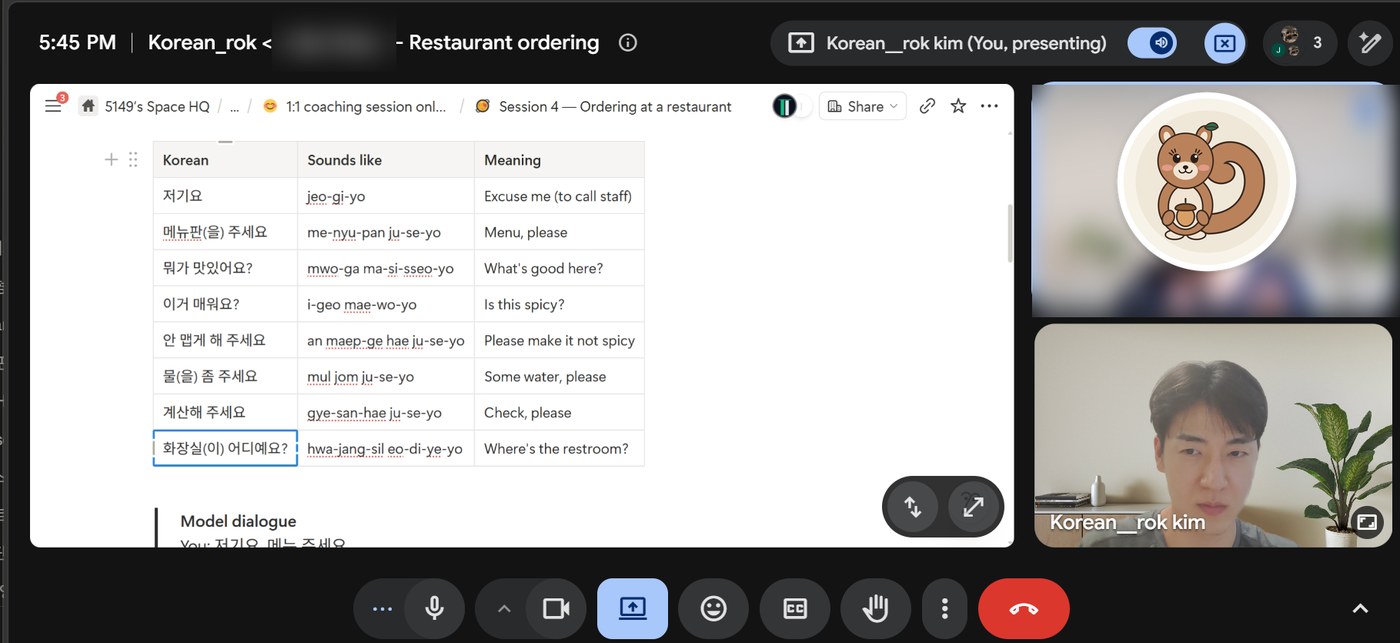
Trial lesson, 1:1 with me
$3055 minutesonline
We talk, I listen, I fix what’s in the way. You leave knowing what your actual problem is.
Pick this if you’ve studied before and still can’t say it out loud.
“I want to start on my own first.”
Self-paced course
six levelsstart anywhereyours to keep
Short videos, real scenes, your own speed. No schedule to keep.
Pick this if you’re brand new, or busy, or not ready to talk to a person yet.
“I don’t want to do this alone.”
마루 · Maru
Free to join50 countries
People learning the same thing you are, plus what I send members.
Pick this if the hard part isn’t the Korean — it’s keeping going.
Or just start reading — The 6-Month Korean System and the notebooks
Preparing for TOPIK? Get a plan for your level and your test date
Where you’d start, and where it goes
Level 0 → 5
- 00Read Korean: Hangul in 7 Days
- 01First Words
- 02Real Korean
- 03Speak Korean
- 04Everyday FluencyRecording
- 05Sound Like a NativeRecording
Teaching
Not levels. Situations, and the things underneath them.
01
Basic Korean
Enough Korean to stand in the room.
02
Writing into speaking
For people who think faster than they can speak.
03
Business Korean
The language of the table you’re already sitting at.
From students
9.7/10
What the students quoted below scored it, on average.
Nobody below nine
“Your patience, encouragement, and positive energy create a welcoming environment where making mistakes feels like part of the learning process instead of something to fear.”
 Michelle · Panama
“Before taking your class, I tried learning Korean through apps like Pimsleur and Duolingo; however, they couldn't provide the human connection, cultural insights, or personalized guidance that come from learning with a native Korean teacher.”
 Lucie · El Salvador
“The lesson is very well structured and you give us psychological support, so we have the strength not to give up when things get tough.”
 Maria · Greece
“Some of my previous teachers weren't as detailed, or wouldn't correct my mistakes as I spoke — which is a priority for me.”
 Esther · United States
50
countries in the community
~100
people in the room
5
continents taught across
2018
teaching since
Fifty countries, one floor.
마루 is the raised wooden floor of a Korean house — the part where people sit down together. This is that, for people learning Korean.
Next time we meet
- When
- Thu 5 November 2026, 19:00 – 21:00
- Where
- A café in Yeouido or Yongsan
- Who
- 3–4 of us. Small on purpose.
- Cost
- To be confirmed
Inside Maru
Rooms — the language, travelling here, living here for work or study
- Rooms — the language, travelling here, living here for work or study
- Once a month — one real table in Seoul, for however long it runs
- Free to join — with two warmer tiers if you want more of me
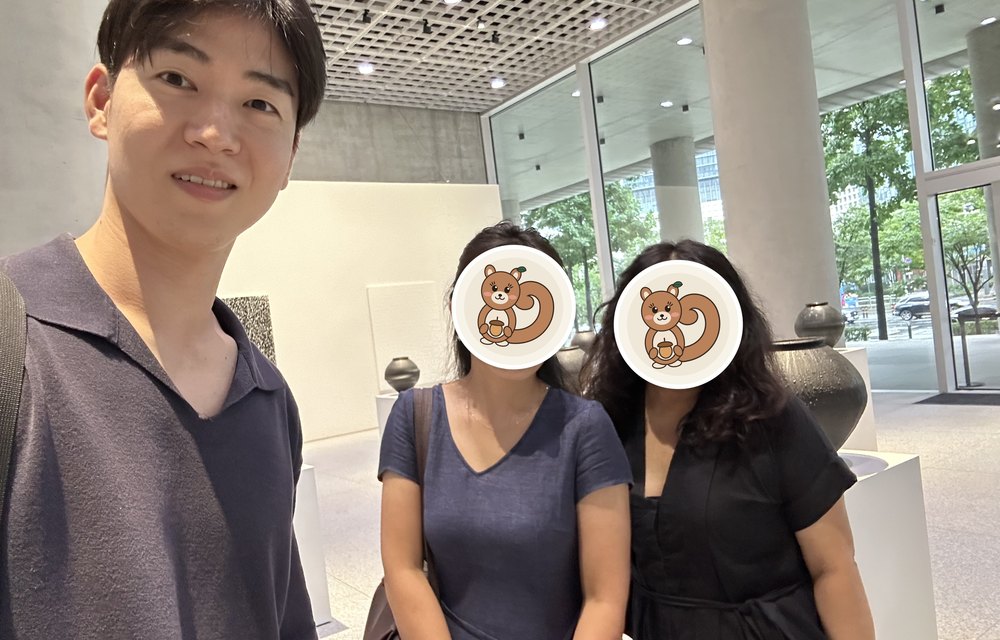 Seoul, August 2026 — tea, then dinnerSee the room
The city, in person.
A day of Korean — taught, interpreted, and filmed.
It has a site of its own now.
Who’s behind this
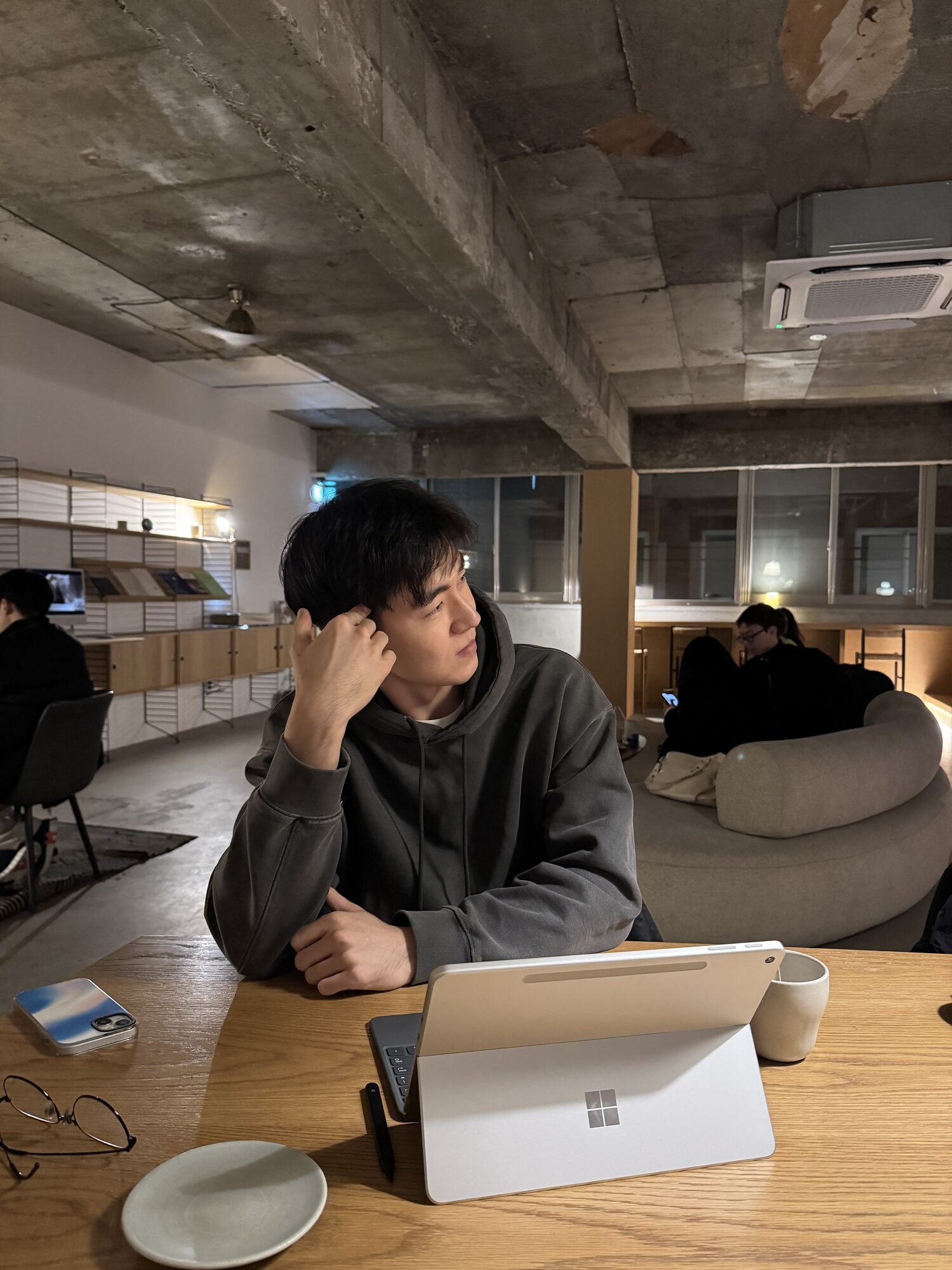
I’m Rok. I’ve been teaching Korean since 2018 — first to friends, then properly.
Before you start
The five questions I get most
The honest answers — not the ones that sell best. All the questions I get.
Course if you’re starting from zero, or you want to build the foundation on your own schedule. It’s the cheaper, slower, entirely self-directed path, and it works.
1:1 if you already know more than you can use, or if the thing stopping you is other people hearing you. You can also do both — most of my coaching students are working through a course between sessions.
No — not in the way people mean. The alphabet takes about a week; it was designed to be learnable, and that part is genuinely easy.
What’s hard is something nobody warns you about: within a few months you’ll understand far more than you can say. That gap is where almost everyone stops, and it isn’t a difficulty problem. It’s a practice problem, and it has a fix.
Depends what you mean by conversation. Ordering, asking for directions, small talk with a shop owner — a few months, if you’re speaking out loud from week one.
Talking about your day, your opinions, a disagreement — that’s a year or more of real use, not study hours. The people who get there fastest aren’t the ones who study most. They’re the ones who started speaking before they felt ready.
Yes. It’s the one thing I won’t talk anyone out of.
Romanization feels faster for about two weeks, then it quietly caps you — you end up pronouncing Korean with English mouth habits and you can’t read anything real. Learn Hangul in week one, keep romanization as a bridge, and drop it. In my books it fades out entirely by month three, on purpose.
Because listening and speaking are different skills, and almost everything you’ve been doing trains the first one.
Dramas, apps, textbooks, videos — all input. Speaking only improves by speaking, out loud, with someone who corrects you kindly and immediately. If this is the question you came here with, it’s the one my whole method is built around.
The courses here are for speaking, so on their own, not reliably — they are not built around the test and I would rather say so than sell you one.
TOPIK has its own line: a plan for your level and your date, a monthly mock test so you can see the score move, and four weeks of 1:1 before the test if you want them. Start with the plan — it is free, and it will tell you if your target is realistic.